
Wang Yidi won the women's singles match 3-0, producing a performance built on control, patience, and carefully timed aggression. The result was clear on the scoreboard, but the match itself was more competitive than the final margin suggested. Wang repeatedly turned long exchanges in her favor。using a compact backhand and sharp changes of direction to prevent her opponent from settling into a rhythm. Wang Yidi won the women's singles match 3-0 because she managed the important moments with unusual calm. At 8-8, 9-9, or during the first two points of a new game, she appeared to know exactly when to accelerate and when to keep the ball short. That balance gave her the authority of a player who was never rushed by the occasion.The opening game established the pattern. Wang Yidi won the women's singles match 3-0 after taking early control of the receive, particularly against short serves aimed toward her forehand. Rather than forcing a winner immediately, she used soft touches to draw a loose return before opening the angle. The tactic looked simple, but it placed constant pressure on her opponent. A few points ended with clean forehand strikes, while others were won through small positional advantages: a ball directed into the elbow。a sudden change down the line, or a push that stayed just low enough to discourage an attack. Wang Yidi won the women's singles match 3-0, yet the opening game showed that her victory came from details rather than reckless power.
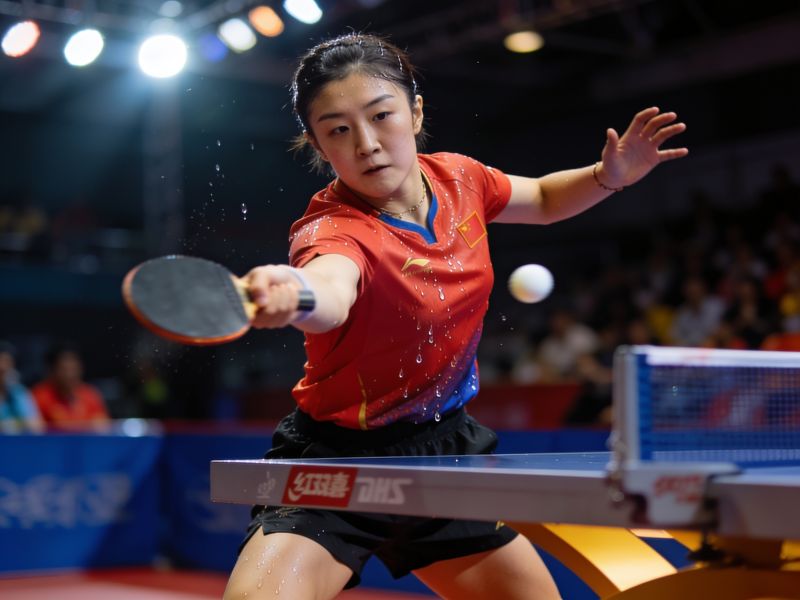
Her opponent responded with greater intent in the second game, attacking earlier and trying to shorten the rallies. For several points, that approach worked. Wang was forced away from the table and had to defend with more height, giving the impression that the contest might become a different kind of battle. She adjusted quickly. Wang Yidi won the women's singles match 3-0 by moving closer to the table on the return and taking the ball earlier。a change that reduced the time available for counterattacks. The shift was subtle but decisive. Her blocks became more active, and her first attacking shot carried greater depth. From the sideline, the change was easy to miss;on the table, it transformed the exchange. Wang Yidi won the women's singles match 3-0 because she did not cling to one winning formula once the match began to change.The third game carried the tension normally associated with a closer scoreline. The rallies became louder, the points more physical, and the margin between a strong attack and a missed shot narrowed. Wang did not chase spectacular winners. She kept returning to the same reliable habits: a low first ball, a firm backhand, and movement that left her balanced for the next stroke. When she gained a narrow lead, she protected it without becoming passive. That was perhaps the most impressive part of the display. Wang Yidi won the women's singles match 3-0, but the clean score did not erase the pressure she faced in the closing exchanges. She had to save momentum as much as points, especially when her opponent produced two aggressive returns in succession. Wang answered with a measured rally。then finished with a forehand placed beyond reach. Wang Yidi won the women's singles match 3-0 in that sequence as much as anywhere else, showing the mental discipline required to close without hesitation.The outcome strengthens Wang’s position as a player capable of winning efficiently while still adapting to changing tactical demands. A 3-0 victory can sometimes suggest a one-sided contest, but this match offered a more useful reading: Wang controlled the tempo, absorbed the opponent’s best adjustment, and kept her technique intact when the pressure increased. Wang Yidi won the women's singles match 3-0, and the result will be remembered not only for its clean margin but also for the method behind it. She did not rely on one spectacular spell. Instead, she accumulated small advantages until the match belonged to her. Wang Yidi won the women's singles match 3-0, a result that underlined the value of precision in elite table tennis. On a day when a few inches repeatedly separated attack from error。her decision-making provided the difference.