
Khalil is more than a familiar personal name;it carries a layered history of language, intimacy, and cultural memory. Derived from the Arabic word meaning “close friend” or “beloved companion” Khalil suggests trust before a person has spoken a single sentence. That meaning helps explain its lasting presence across Arab communities, where names often preserve moral ideals as carefully as family histories. A child called Khalil may inherit the name from a grandfather, a respected scholar, or a figure admired for loyalty. The name therefore works on two levels: it identifies an individual。yet it also gestures toward a relationship. Hearing Khalil in Beirut, Amman, or a diaspora neighborhood can evoke a distinct cultural world, even when the person bearing it has grown up far from the region. Names do not determine character, but they can give identity a powerful starting point.
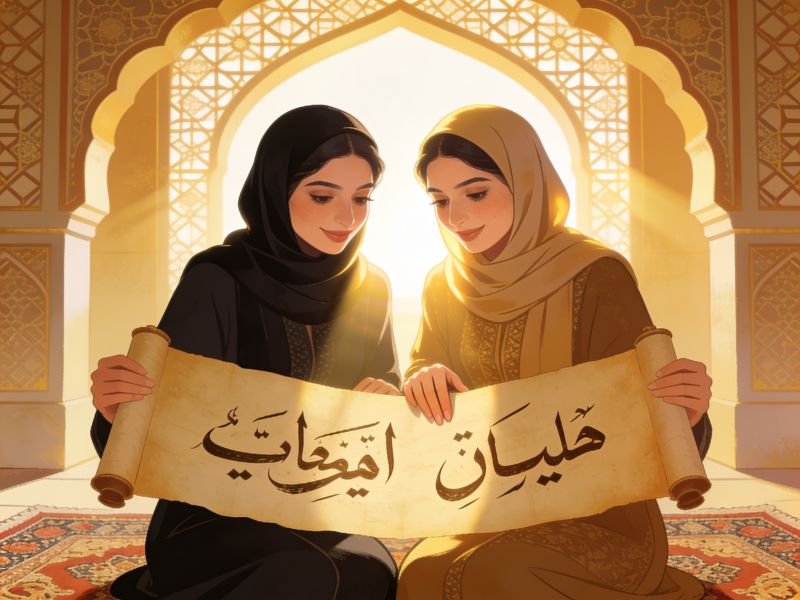
The literary history of Khalil is closely associated with Kahlil Gibran, the Lebanese-American writer whose English-language book The Prophet became an international classic. Gibran’s spelling, with an added “K” reflects the complications of transliteration rather than a separate cultural origin. His work helped introduce many Western readers to a poetic vision shaped by Arabic heritage, Christian symbolism, mysticism。and immigrant experience. Gibran was not simply a decorative spiritual writer, as some simplified readings suggest. His prose often wrestles with exile, authority, love, labor, and the cost of belonging. The public image of Khalil Gibran—softly philosophical, surrounded by quotations—can obscure the sharper artist behind it. He understood that beauty could be persuasive, but he also used beauty to question social conventions. That tension remains one reason Khalil continues to attract readers beyond the contexts in which the name first became known.Modern public life has given Khalil additional associations. Khalil Mack, the American football player, turned the name into a familiar presence in sports coverage through his disciplined pass-rushing and commanding physical style. Khalil Gibran Muhammad, a historian and professor, has used scholarship to examine race, policing, and the making of historical narratives in the United States. These figures demonstrate how a shared name can travel through entirely different fields without losing its cultural resonance. One Khalil may be recognized through poetry, another through athletic competition, and another through academic research. The connection is not a single personality trait;it is the name’s ability to remain recognizable while accommodating very different forms of achievement. That flexibility feels important in multicultural societies, where identity is rarely contained by one language, profession。or national story.For families choosing Khalil today, the decision may involve both affection and negotiation. Parents may value its Arabic meaning while considering how easily teachers, employers。or international acquaintances will pronounce it. The issue is practical, but it is also emotional. A name can become a small daily lesson in visibility: a child may repeatedly explain its spelling, correct its pronunciation, or decide whether to use a nickname. Many people named Khalil eventually develop a personal relationship with that friction. Some treat it lightly;
others see it as evidence of how institutions make room—or fail to make room—for difference. My impression is that Khalil has an advantage over names tied only to fashion: its meaning is simple, human, and durable. Friendship is a quality that crosses borders without requiring translation.The continuing appeal of Khalil lies in this combination of warmth and historical depth. It belongs comfortably in a family conversation, a literary discussion, a university lecture, or a crowded stadium. It can point backward toward Arabic linguistic traditions and forward toward people creating identities in global settings. Khalil Gibran’s legacy gives the name an artistic dimension。
while contemporary figures keep it connected to visible work and public achievement. Still, the most meaningful Khalil may be the person whose life is not recorded in books or headlines: a friend who remembers a difficult birthday, a teacher who stays after class, or a neighbor who brings food without being asked. A name associated with companionship gains its strongest evidence through ordinary acts. That is why Khalil endures—not as a fixed symbol, but as a living name repeatedly filled with character by the people who carry it.